Leave this field empty
July 21, 2026
By William Mangum Fine Art
Part Two: What the Old Mill Taught Me About Resourcefulness
There are some places that seem to whisper every time you visit. For me, one of those places is the Old Guilford Mill just outside of Greensboro.
I've painted it more times than I can remember. It has appeared in my books, including North Carolina Beautiful, and even served as the backdrop while I painted during a PBS television special. Yet every time I set up my easel, I discover something new—not because the mill has changed, but because I'm seeing it through different eyes.
As I've been creating the commemorative painting for the Association Executives of North Carolina, I realized this beloved landmark beautifully illustrates the second principle in my upcoming keynote,
There's an ART to Making a Difference.
Built more than 250 years ago, the Old Mill continues to grind grain much as it did in the 18th century. Before American became the United State and George Washington our first President. We didn’t have electricity or modern machinery, its builders looked to the water flowing through Beaver Creek. They didn't invent the power—they simply learned how to harness it. A turning waterwheel transformed an ordinary stream into something capable of feeding an entire community.
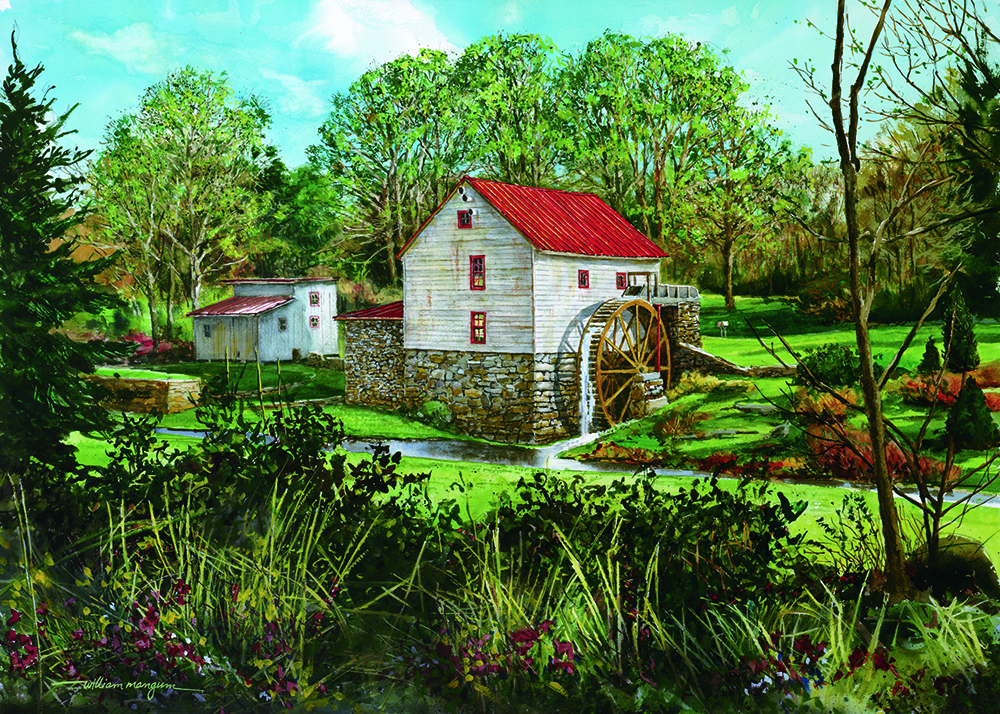
 That simple idea has stayed with me over the years.
First, resourcefulness begins by appreciating what you already have. The mill's builders didn't wait for better tools or perfect conditions. They looked at the natural resources around them and found a way to put them to work. The same is true in life. Often, our greatest opportunities begin with the gifts we've already been given.
Second, resourcefulness is fueled by creativity, not abundance. Great accomplishments rarely come from unlimited resources. More often, they come from people willing to think differently, adapt, and make the most of what is available. Artists understand this well. Every blank canvas is simply an invitation to create something that didn't exist before.
Finally, resourcefulness has a ripple effect. The Old Mill wasn't built to impress visitors. It was built to serve a community. For generations, families brought their grain, shared stories, and depended on the steady turning of that waterwheel. Real resourcefulness isn't measured by what we accumulate, but by how many people benefit from what we create
Perhaps that's why I've returned to this old mill so many times over the years. It isn't simply because it's beautiful. It's because every weathered board and every turning wheel reminds me that remarkable things happen when ordinary people use ordinary resources in extraordinary ways.
Next week, we'll travel east to one of North Carolina's most recognizable landmarks—the Cape Hatteras Lighthouse—and discover why Timing may be the most overlooked ingredient in making a lasting difference.
Until then, I hope you'll remember this:
Resourcefulness isn't having everything you need. It's discovering that what you already have is often more than enough.